
Every firm has a tidy answer for emails. They sit in the practice management system, attached to the right client, searchable when someone asks "what did we actually tell them?" Phone calls, if you've set things up well, log themselves too.
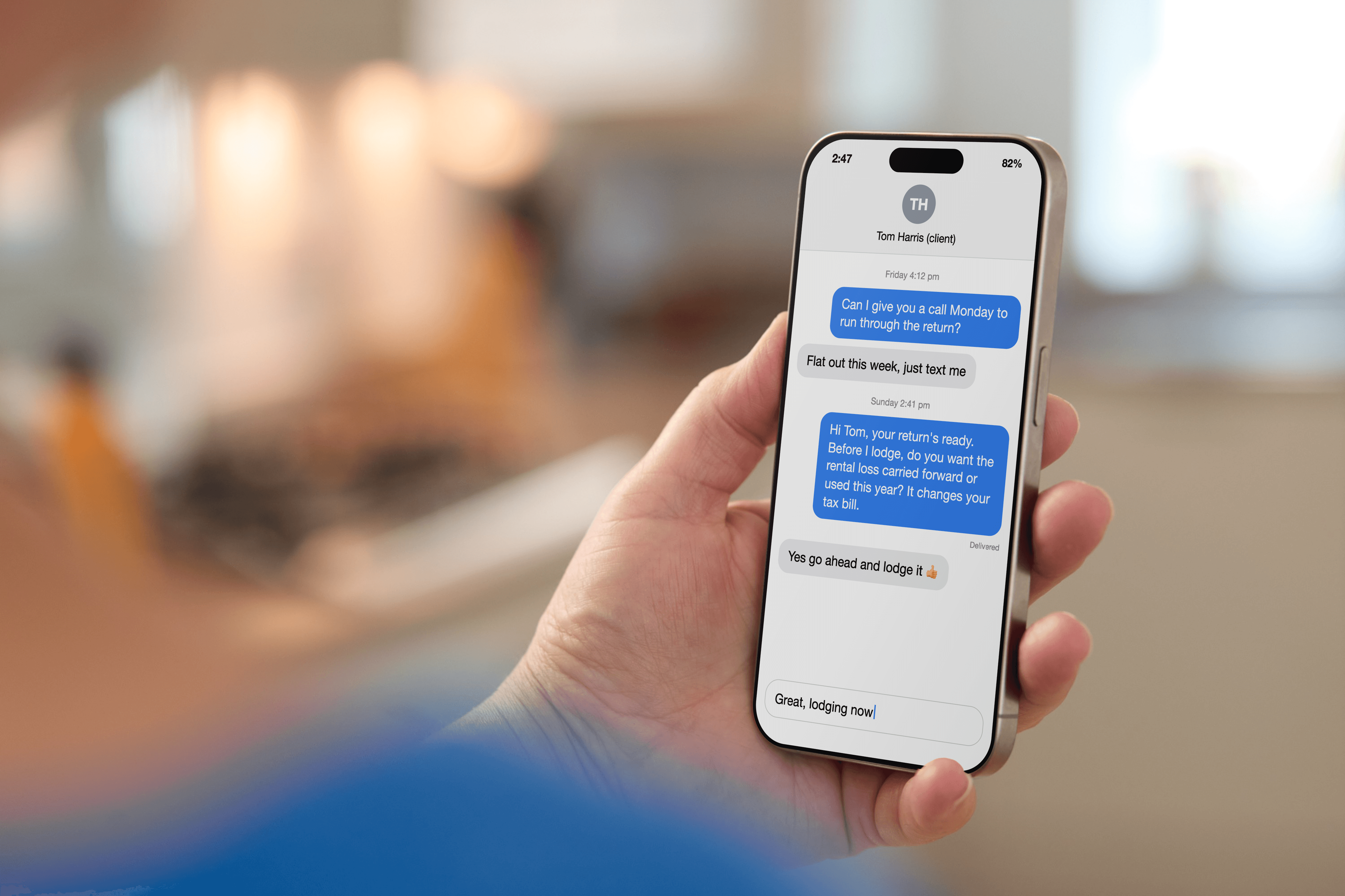
Then a client texts your senior accountant's mobile on a Sunday: "Yes go ahead and lodge it." The return gets lodged. Eight months later the client disputes it, and the only evidence of their instruction is sitting in a personal message thread on a phone the firm doesn't control.
So, do text messages count as client records? In practice, yes - if the message relates to the work you're doing for a client, it's part of the record of that engagement, and you should treat it that way.
Here's what that means for firms in Australia and the UK.
The rules don't care about the channel
Record-keeping obligations are written around the substance of a communication, not the medium it arrived through. A client instruction is a client instruction whether it comes by letter, email, phone call or text.
In Australia, the Australian Tax Office, or ATO, requires businesses to keep records of transactions relating to their tax and superannuation affairs, and most records need to be kept for five years. That five-year period generally runs from when the record was prepared or obtained, or when the transaction was completed, whichever is later. Nothing in those rules exempts a communication because it happened to be 160 characters long.
In the UK, limited companies need to keep records for at least six years from the end of the accounting period they relate to, while sole traders and partnerships keep theirs for at least five years after the 31 January Self Assessment deadline. His Majesty’s Revenue and Custom's (HMRC) expectations cover the documentation behind figures in a return, and where a text message contains an instruction, approval or piece of information that is fed into that work, it forms part of that documentation.
For accounting firms specifically, there's a second layer: your professional body. CPA Australia, CA ANZ, ICAEW and ACCA all expect members to maintain adequate records of client engagements, including the advice given and instructions received. If a client's approval to proceed came by text, that text is evidence of the instruction. Your engagement file is incomplete without it.
Where firms get caught out
The problem is rarely that firms don't know texts matter. It's that texts happen in places the firm can't see.
A partner's personal mobile. A WhatsApp thread that started as a quick question about a BAS deadline and turned into a running channel for client instructions. Or a common one; a staff member who left the firm and took two years of client messages with them.
When those messages are needed, whether for a fee dispute, a professional indemnity claim, a complaint to a professional body, or an ATO or HMRC review, the firm has to reconstruct conversations from memory and hope the client's recollection matches theirs.
There's also a data protection angle, particularly in the UK. Client messages contain personal data, and UK GDPR requires you to keep personal data no longer than necessary and to know where it lives. Personal data scattered across staff members' personal devices is hard to secure, hard to produce if a client makes a subject access request, and hard to delete when retention periods end. Australian firms handling personal information have similar obligations under the Privacy Act's security and retention principles.
What good looks like
The fix isn't banning texting. Clients text because it works for them, and firms that make clients communicate on the firm's preferred channel tend to find clients simply communicate less. The fix is making sure texts happen on channels the firm controls.
In practical terms, that means client texting runs through the firm's business numbers rather than personal mobiles, messages attach to the client record alongside calls and emails, and the conversation history survives staff turnover. When someone asks "did the client approve this?", the answer is in the file, not on a phone.
This is the thinking behind SMS in Cradle. Messages to and from your firm's numbers sit in the same place as your call history, matched to the right contact, so a text approval is as findable as an email one. Clients can text back and forth or pick up the phone when a conversation needs more than a message, and either way the trail stays with the client, not with whichever device happened to receive it.
A simple test for your firm
Ask yourself one question: if a client disputed a piece of work tomorrow, could you produce every instruction they gave you, regardless of how they sent it?
If the answer is yes for email and no for text, your record-keeping has a gap shaped exactly like the way your clients increasingly prefer to communicate.
This Cradle article is general information, not legal or professional advice. Record-keeping obligations vary by entity type, jurisdiction and circumstances, so check the current ATO or HMRC guidance and your professional body's requirements, and seek advice on your firm's specific situation.